Sitting and longevity: why being sedentary ages you even if you exercise
Sitting for hours a day raises mortality risk even if you exercise. What the research says about sedentary time — and how to break it up.
Read more →Science-backed insights on longevity, biological age, and the training strategies that actually move the needle.
Sitting for hours a day raises mortality risk even if you exercise. What the research says about sedentary time — and how to break it up.
Read more →

Moderate coffee drinking is linked to lower mortality and slower aging across huge cohort studies. Here's what the research actually says about coffee and longevity.
Read more →

How fast you walk is one of the most validated predictors of how long you'll live. Here's what the research says, what a 'good' pace looks like, and how to train it.
Read more →

Roughly half of adults don't get enough magnesium, and a normal blood test won't catch it. Here's what the research says about magnesium, ageing, and how much you need.
Read more →

Fiber gets none of the hype protein and omega-3 enjoy, yet it shows up in mortality data again and again. Here's what the research says — and how much you actually need.
Read more →

You take roughly 20,000 breaths a day and haven't thought about a single one. Turns out the mechanics — nasal vs. mouth, rate, CO2 tolerance — have measurable effects on how you age.
Read more →

The trillions of microbes in your gut regulate inflammation, influence biological age, and look dramatically different in centenarians. Here's what the research actually says — and what to do about it.
Read more →

Creatine is the most researched sports supplement in existence — and most of its longevity benefits have nothing to do with bulking. Here's what the science actually says.
Read more →

Around 40% of Europeans are vitamin D deficient — and most don't know it. Here's what the research shows about vitamin D, biological ageing, and how much you actually need.
Read more →

Omega-3s reduce chronic inflammation, slow telomere shortening, and cut cardiovascular mortality. Here's what the research shows — and how much you actually need.
Read more →

A simple floor test predicts all-cause mortality more accurately than most clinical measures. Here's the research on mobility, flexibility, and longevity — and what to actually do about it.
Read more →

Inflammaging is the persistent, low-grade inflammation that accumulates with age and underlies most age-related disease. Here's what the research says and how to slow it down.
Read more →

Chronic stress accelerates the biological processes that drive ageing — via telomere shortening, allostatic load, and HRV suppression. Here's what the research shows and what actually helps.
Read more →

Resistance training reduces all-cause mortality, preserves the muscle that protects you in old age, and improves nearly every biomarker of biological aging. Here's what the science says — and a practical protocol.
Read more →
Elevated blood glucose accelerates biological aging well before diabetes develops. Here's what the research shows about blood sugar, glycation, and how to improve your metabolic health.
Read more →
Time-restricted eating compresses meals into a daily window. Here's what the research shows about metabolic health, autophagy, aging — and what a practical protocol actually looks like.
Read more →
The 0.8g/kg protein RDA was never designed as a longevity target. Here's what the evidence says about optimal protein intake for maintaining muscle and ageing well.
Read more →
Ice baths and cold plunges have real physiological effects — brown fat activation, norepinephrine spikes, improved metabolic health. Here's what the research shows and what it doesn't.
Read more →
A 20-year Finnish study of 2,315 men found regular sauna use reduced sudden cardiac death by 66%. Here's the evidence, the mechanisms, and how often you actually need to go.
Read more →
Grip strength is one of the most validated predictors of all-cause mortality. Here's what the research actually says, what a 'good' number looks like, and how to train it without a dedicated grip programme.
Read more →
Heart rate recovery — how fast your pulse drops in the first minute after exercise — is one of the strongest independent predictors of all-cause mortality. Here's what the research says and how to train it.
Read more →
The 10,000-step target was a 1960s marketing slogan, not a research finding. Here's what the longevity studies actually say about step counts, pace, and age.
Read more →
The research on food and ageing, without the wellness theatre. What the Mediterranean, Blue Zones, and fasting studies actually show — and how to eat without joining a cult.
Read more →
Resting heart rate is one of the most predictive — and most underrated — longevity biomarkers. Here's what the research says and how to lower yours.
Read more →
Sleep is one of the strongest levers for ageing well. Here's the mortality curve, what's happening underneath, and how much sleep adults actually need.
Read more →
Skeletal muscle is one of the strongest predictors of how well you age — stronger than BMI, stronger than blood pressure. Here's the research, the numbers, and how to actually build it.
Read more →
Zone 2 is the lowest-glamour, highest-impact training for longevity. Here's what it actually is, why mitochondria care, and how to find your zone without a lab.
Read more →
Heart rate variability (HRV) is one of the strongest biomarkers of autonomic health and aging. Here's what the research says about HRV, why it declines with age, and how to improve yours.
Read more →
Your chronological age counts years since birth. Your biological age measures how well your body is actually aging. Here's what the science says and how to track it.
Read more →
Zone 2 cardio, strength training, VO2 Max intervals, and stability work form the foundation of longevity fitness. Here's how each pillar contributes to a longer, healthier life.
Read more →
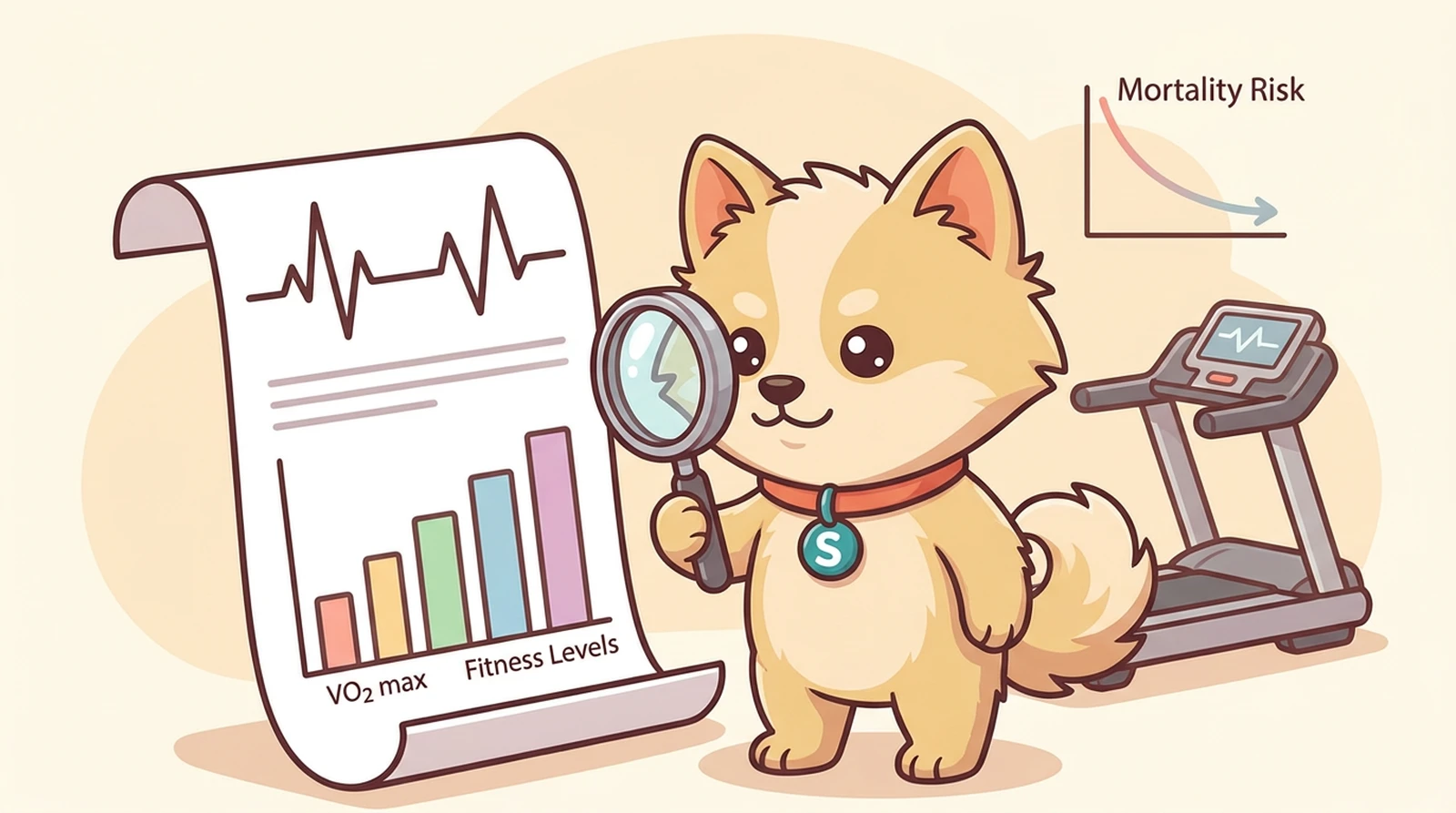
A 2018 JAMA study of 122,000 patients found that VO2 Max is more strongly associated with survival than almost any other risk factor. Here's what the research says and how to improve yours.
Read more →